The wash stage: dirt off without scratches
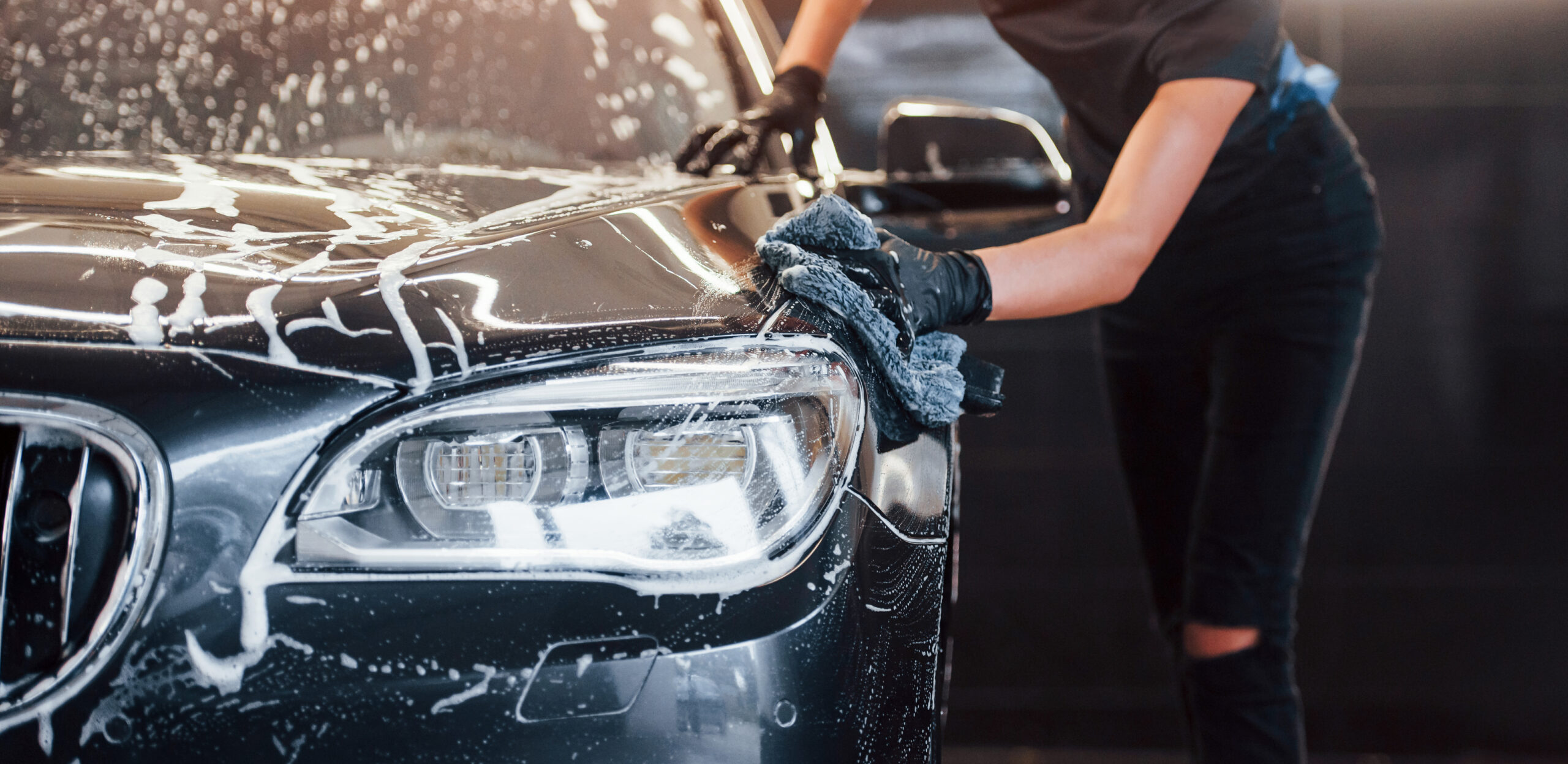
1. Foam pre-soak and foam cannon
Before a mitt touches the car, a thick layer of foam goes on and dwells. It loosens and lifts dirt so much of it rinses away untouched. In Sedona this step matters more than almost anywhere: the red iron-oxide dust is fine and abrasive, and the less of it a mitt pushes around, the fewer scratches it leaves. Foam has to be rinsed before it dries, which in summer means working in shade or in smaller sections.
2. Two buckets with grit guards
One bucket holds soapy water, the other holds clean rinse water. The mitt goes into the rinse bucket after every panel, and a grit guard at the bottom keeps settled dirt from being picked back up. It is a simple system, and it is the main reason a hand wash does not have to cause swirl marks.
3. Quality microfiber
Wash mitts, drying towels, buffing towels and glass towels each have a weave suited to the job. Good microfiber traps particles in its fibers instead of dragging them across paint. Pros keep towels separated by task, wash them without fabric softener and retire them once they turn stiff. A towel that touched a wheel never touches paint.
Wheels and decontamination
4. Wheel-specific brushes
Wheels carry the heaviest grime on the car: brake dust, road film and, after Flagstaff and Williams winters, cinders and de-icing residue. Dedicated brushes reach the barrels, the gaps between spokes and the area around lug nuts without sharing grit with the paint mitt. Soft face brushes protect painted and polished wheel finishes.
5. Iron remover
Brake dust and rail dust contain tiny iron particles that embed in paint and wheels, and on light-colored cars they show as orange specks. An iron remover reacts with those particles and dissolves them, usually turning purple as it works. It removes contamination that washing cannot, without scrubbing.
6. Clay bar or clay mitt
After iron removal, paint can still feel rough. That texture is bonded contamination: overspray, sap residue, mineral deposits and industrial fallout. Clay glides over a lubricated surface and shears those particles off, leaving the paint smooth as glass. This is the step that prepares paint for polishing, a ceramic sealer or a full coating.
| Tool | Home use | Arizona note |
|---|---|---|
| Foam pre-soak | Yes, with a pump sprayer or foam cannon | Lifts red dust before anything touches paint |
| Two buckets and grit guards | Yes, essential | Keeps abrasive soil out of the wash mitt |
| Quality microfiber | Yes, kept separate by task | Never use it to dry-wipe dust |
| Iron remover | Yes, used carefully | Helpful after winter cinder and de-icer exposure |
| Dual-action polisher | Only with practice | Work on cool panels, out of direct sun |
| Forced-air dryer | Helpful | Stops drips that dry into mineral spots |
| Hot-water extractor | Usually not | Pulls embedded red soil out of carpet |
Paint correction
7. Dual-action polisher
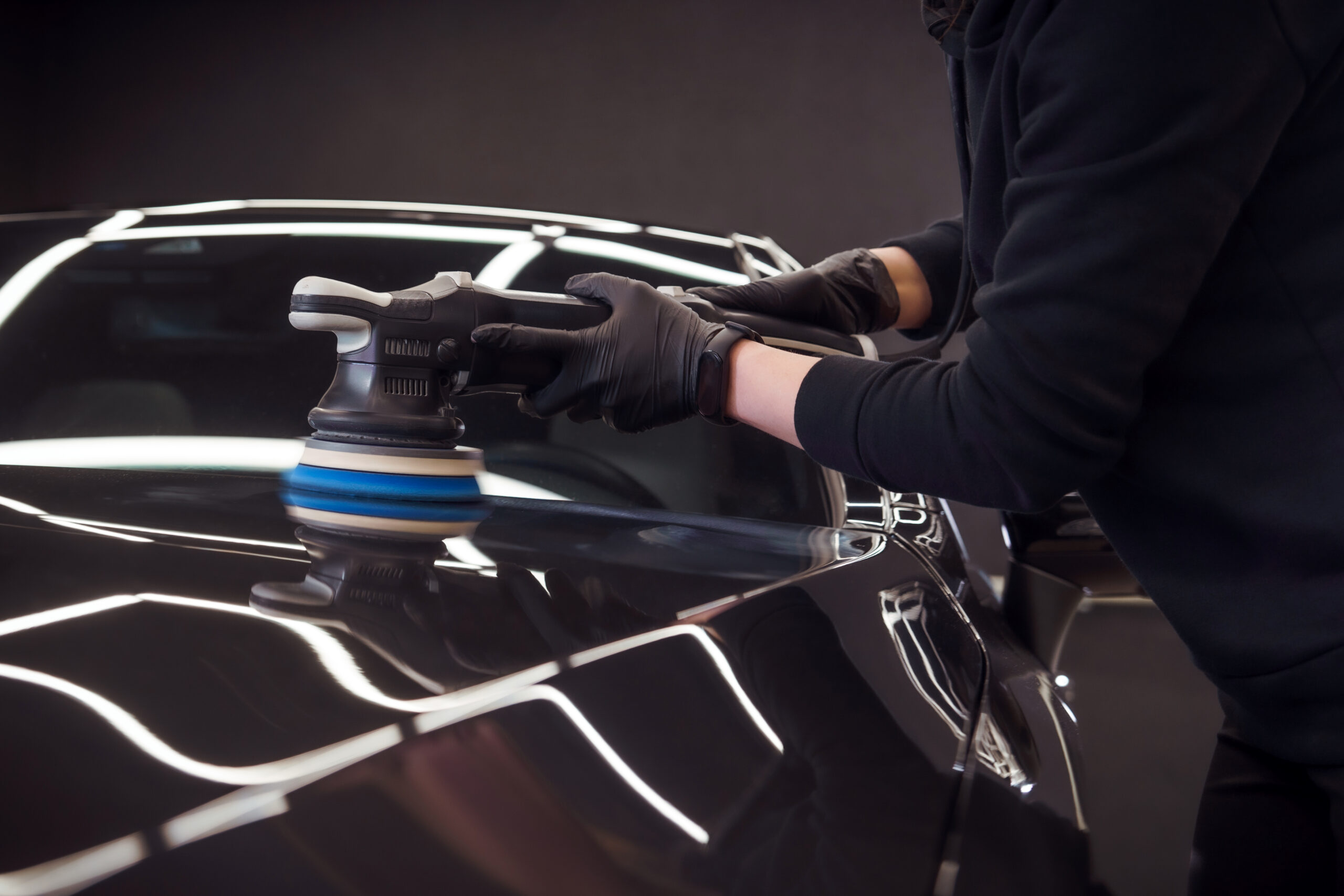
A dual-action polisher spins and oscillates at the same time, which spreads heat and lowers the risk of burning through paint compared with a rotary machine. Paired with the right pads and polishes, it removes swirl marks, wash marring, light etching and oxidation. It is the tool behind our 1-step and 2-step paint correction.
In Arizona, panel temperature is part of the job. Polish works best on cool paint, so timing, shade and checking the surface by hand matter as much as the machine itself.
Drying
8. Forced-air dryer
A forced-air dryer blows water out of mirrors, grilles, emblems, lug nut holes and panel gaps that a towel cannot reach. Those hiding spots are where drips come from after a wash, and in the Verde Valley those drips dry into mineral spots within minutes.
Air drying also means less towel contact with the paint, which means fewer chances to scratch it. Paired with a deionized water rinse, it is the best defense against hard water spots.
Interior tools
9. Hot-water extractor
An extractor sprays a hot cleaning solution into carpet and upholstery and immediately pulls it back out with strong suction, taking dirt, spills and red dust with it. Vacuuming only removes what sits on top. Red soil works deep into carpet fibers and floor mats, and extraction is how it actually comes out.
10. Ozone generator and steam
Steam cleans and sanitizes vents, cupholders, seams and hard plastics without soaking them. Ozone treats odor at the source: the generator runs inside a closed, unoccupied vehicle and breaks down odor molecules from smoke, pets and spills that have soaked into the headliner and seats. The car is aired out before it is returned. Both are part of our interior detailing, and ozone odor removal is also available on its own as an add-on.
How the toolkit changes with the seasons
The same ten tools get used differently through the year here.
- Summer: heat is the enemy. Foam, iron remover and polish all dry faster on hot panels, so the work moves to shade, early hours and smaller sections, and the forced-air dryer earns its place on every car.
- Monsoon season: storms leave mud splashed up the lower doors and rocker panels, along with spotted glass. Longer foam dwell and extra wheel and lower-panel attention handle most of it.
- Winter, up north: cars coming back from Flagstaff and Williams carry cinders and de-icing residue in the wheel wells and underside. Pressure washing and iron remover do the heavy work before a mitt ever touches the paint.
- Spring and fall: pine sap from Rim Country and Flagstaff trips needs softening and gentle removal, followed by clay where residue remains.
Year-round, the red dust never goes away, which is why the foam pre-soak and two-bucket wash never get skipped.
Tools are only half of it
Every one of these tools can be misused. A foam cannon does nothing if the foam dries on hot paint. A polisher in the wrong hands can burn through clear coat on a sharp body line. Microfiber that has been dropped on gravel becomes sandpaper.
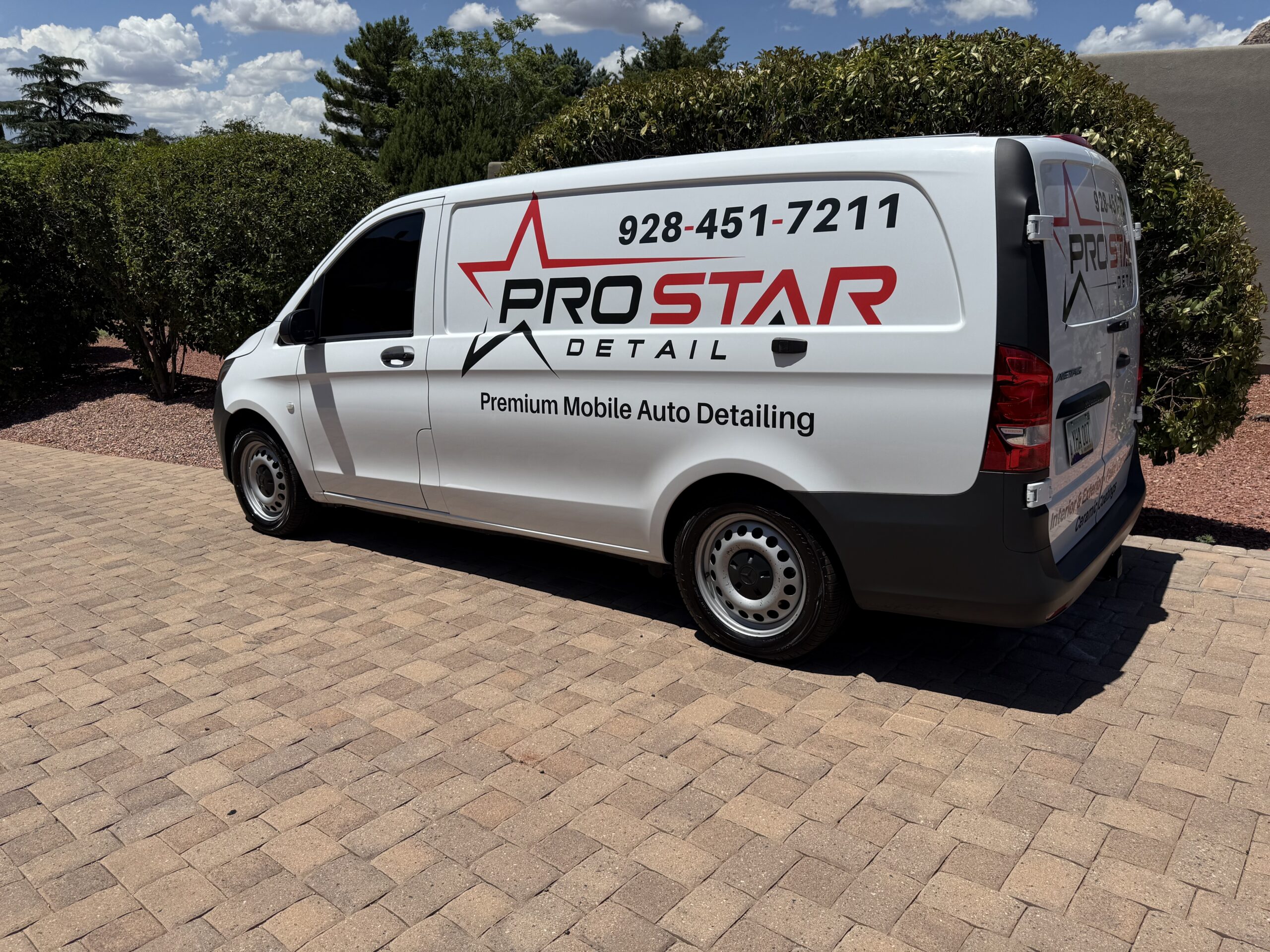
The rest is power and water. Polishers, extractors, steam units and pressure washers need reliable electricity, and the final rinse needs mineral-free water. That is why our van carries its own power, deionized water, pressure washing and vacuum systems instead of relying on a customer's outlets and hose.
If you detail at home, start with the first three on this list: a foam pre-soak, two buckets with grit guards and good microfiber. They prevent more damage than any other purchase. For decontamination, correction and deep interior work, book a detail and let the rig do the heavy lifting.