What a tunnel wash does well
An automatic wash is fast, inexpensive and open whenever you drive past. It gets loose dirt, road film and fresh bird droppings off the car before they sit for days, and that is better than leaving a layer of red dust on the paint for a month.
Many washes also offer an undercarriage spray, which is genuinely useful after a winter trip north, and some sell monthly plans that make frequent rinsing convenient. For a light-colored commuter car that mostly sees pavement, that convenience counts for something.
The trade-off is in how a tunnel gets the dirt off, and in what it leaves behind. Both depend on the type of wash, how well it is maintained and what the cars ahead of you were carrying. You cannot see any of that from the entrance, which is why the results vary so much from one visit to the next.
Where swirl marks come from
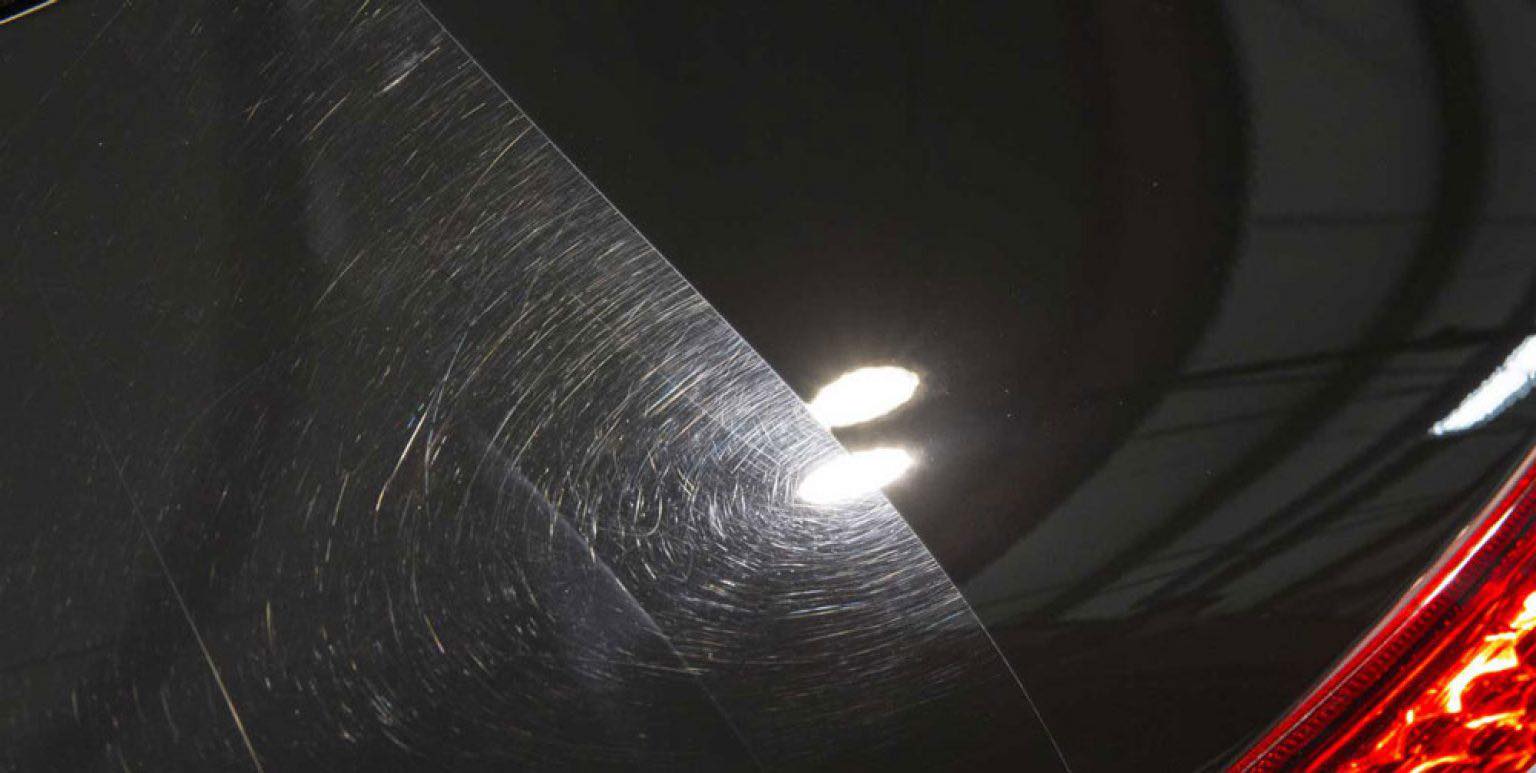
Swirl marks are fine, circular scratches in the clear coat. You see them as a spiderweb pattern around reflections, most clearly on dark paint in direct sun.
They come from friction with grit trapped between something and your paint. In a brush or soft-cloth tunnel, the material slapping your car has already scrubbed every vehicle ahead of you. In the Verde Valley that includes work trucks coming off dirt roads and SUVs coated in red soil, which is iron-oxide based and abrasive. Each pass drags a little of it across your clear coat.
One wash will not ruin a car. Months of them will, and the result is the hazy, dull look most daily drivers have by the time they need paint correction.
| Factor | Tunnel wash | Mobile hand detail |
|---|---|---|
| Contact with paint | Shared brushes or cloth, or harsh touchless chemicals | Foam pre-soak and two-bucket hand wash |
| Rinse water | Often partly recycled; varies by location | Onboard deionized water |
| Drying | Exit blower, drips left in gaps | Forced air and clean microfiber |
| Bonded contamination | Not removed | Iron and clay decontamination in the Executive package |
| Interior | Self-serve vacuum, if any | Vacuum, steam and shampoo |
| Your time | Drive there, wait, drive back | Done at your home or office |
Recycled water and shared brushes
Many tunnel washes reuse part of their water, filtering it between cars. How well that works varies, and fine particles and dissolved minerals can remain. The final rinse is often labeled spot-free, but drying is usually a blower at the exit, which leaves water in mirrors, door jambs and trim. Those drips run out on the drive home and dry into spots.
Touchless washes avoid brushes but use stronger chemicals to make up for the lack of contact. Those can strip wax and sealants faster and are hard on rubber and trim over time. They also cannot remove anything that needs agitation, so a thin traffic film often stays behind.
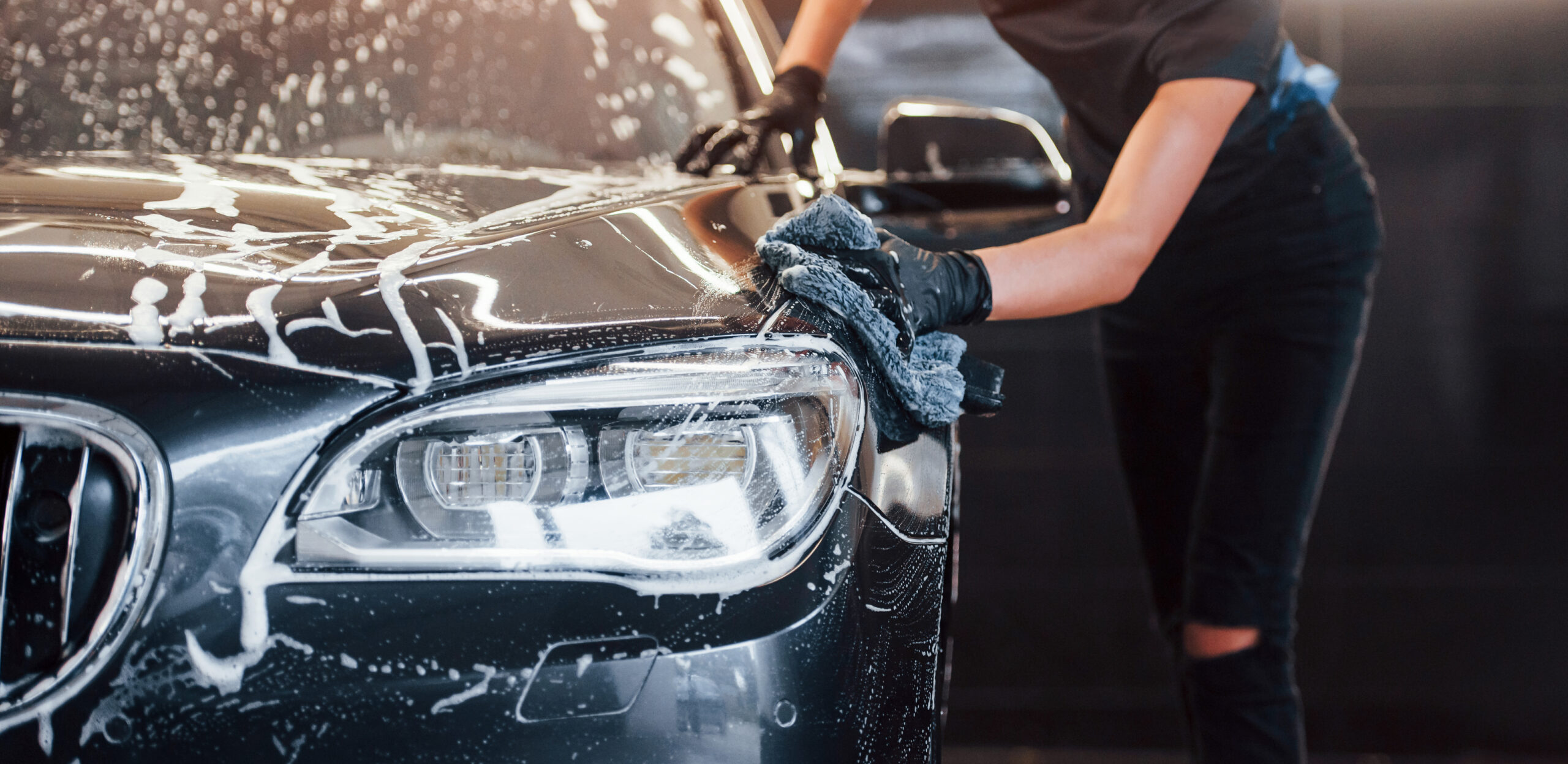
A proper hand wash controls each of those variables: a foam pre-soak, the two-bucket method with grit guards, clean microfiber, and deionized rinse water that dries without leaving minerals.
What a detail removes that a wash cannot
Washing removes what is sitting on the paint. A detail also removes what is stuck to it.
- Iron particles from brake dust and rail dust, which embed in paint and wheels. An iron remover dissolves them.
- Bonded contamination such as overspray, industrial fallout and road tar. Clay shears it off the surface.
- Pine sap picked up around Flagstaff, Payson and Rim Country, which hardens and bonds to clear coat.
- Mineral deposits from hard water and sprinklers. Our water spot guide explains how those are removed.
- Embedded interior soil in carpet and seats, which comes out with hot-water extraction and steam, not a coin-op vacuum.
A detail also puts protection back. Our Executive package includes clay decontamination, trim restoration, a ceramic sealer and a full interior shampoo and steam.
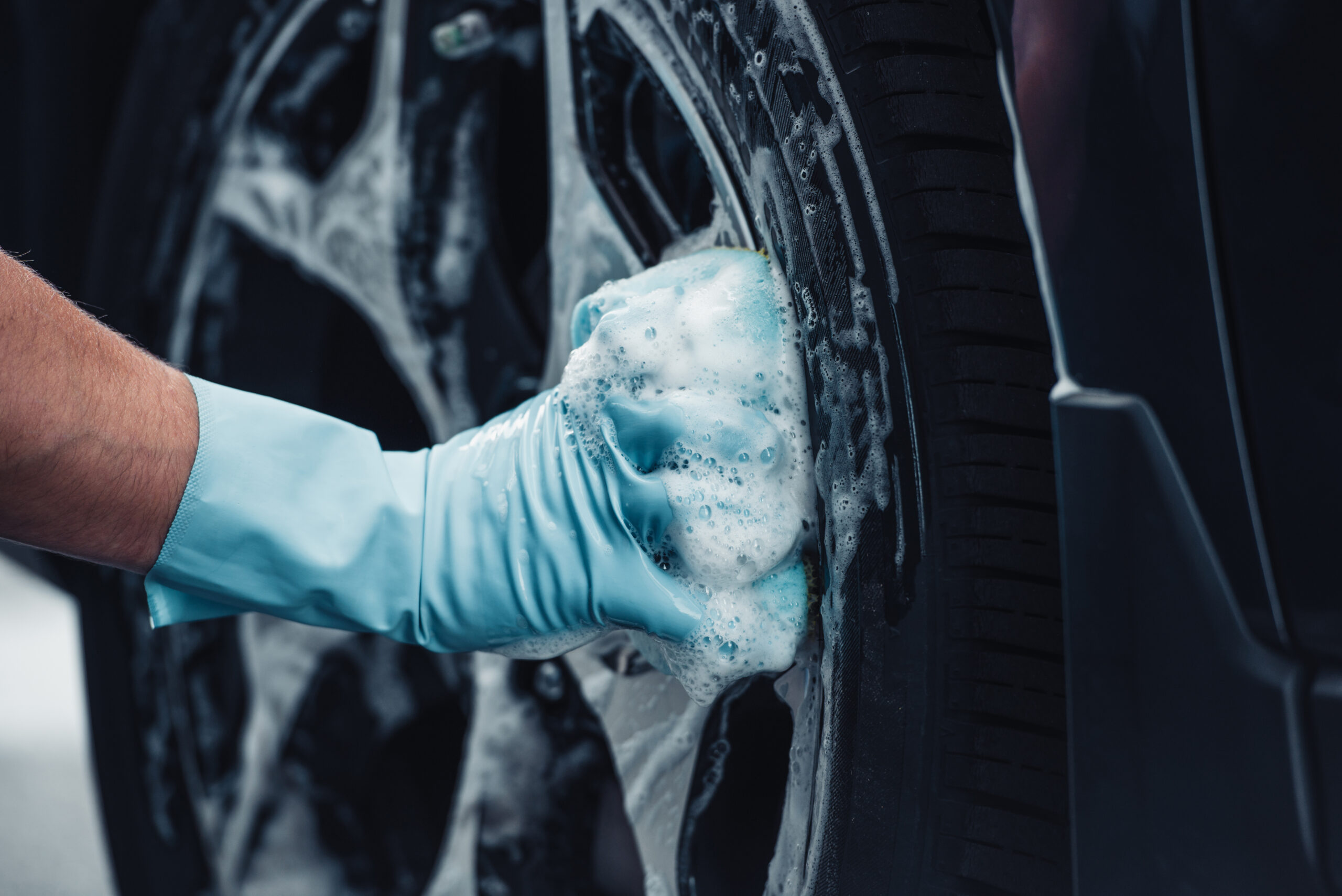
What a mobile detail looks like, start to finish
It helps to see the difference laid out. A typical exterior and interior visit runs roughly in this order:
- Walk-around. A look at the paint, wheels, glass and interior to note existing scratches, chips, stains and anything that needs extra attention.
- Wheels and tires first, with dedicated brushes, so brake dust and grime are never carried onto the paint.
- Foam pre-soak and rinse to lift loose dirt and red dust before any contact.
- Two-bucket hand wash with grit guards, working top down, followed by a deionized water rinse.
- Decontamination with iron remover and clay on packages that include it.
- Drying with forced air and clean microfiber, including mirrors, jambs and trim.
- Protection, such as a ceramic sealer, plus trim and tire dressing.
- Interior vacuuming, then steam and shampoo where included, with glass cleaned last.
None of those steps happen in a tunnel. That is the real gap between the two, more than the soap or the price.
Time and value
A tunnel wash is judged by price per visit. A detail is judged by the condition of the car over months and years.
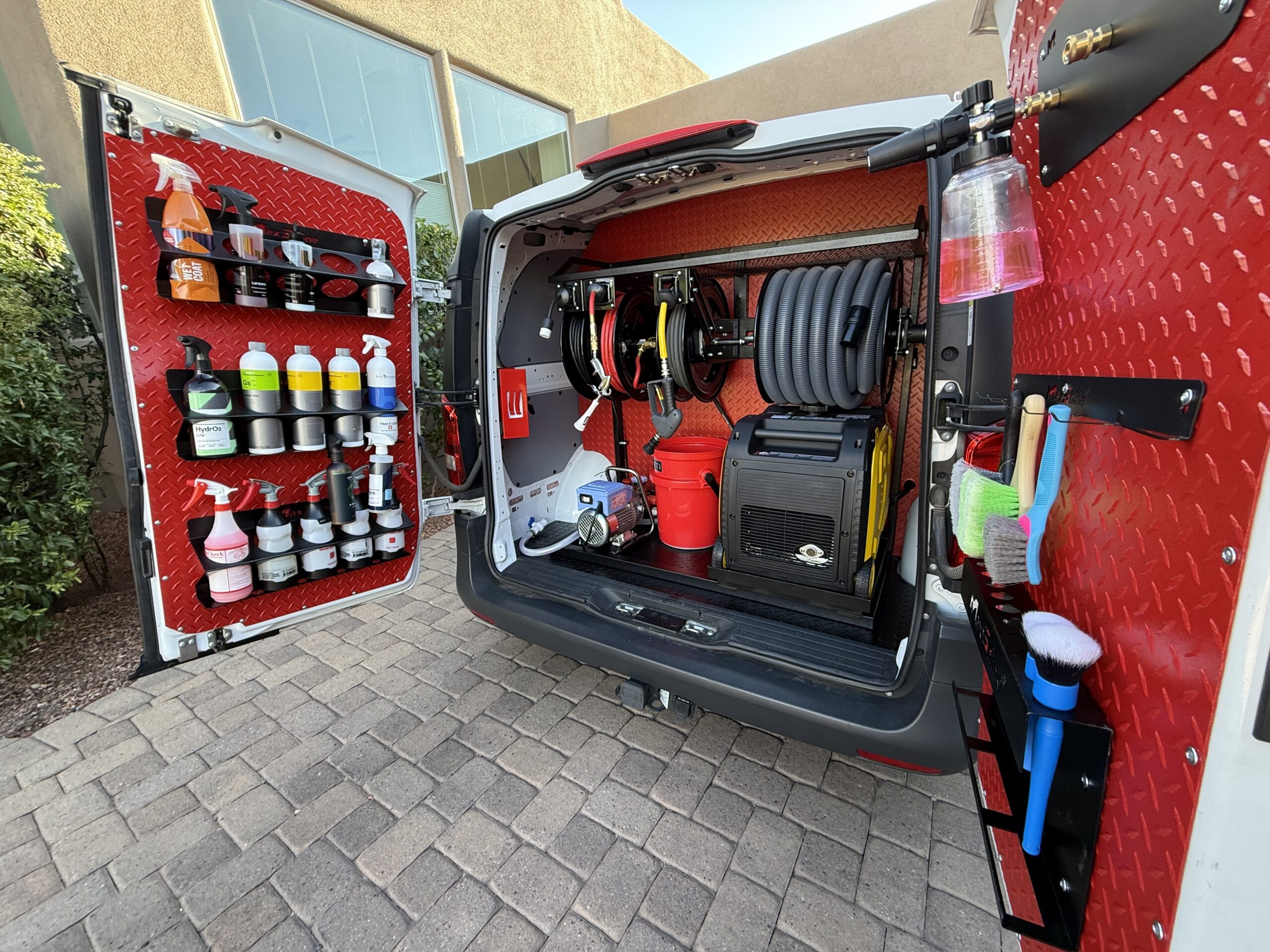
A mobile detail also changes the time math. Instead of driving to a shop, waiting or arranging a ride, the work happens in your driveway or at your office while you get on with your day. Our van brings its own power, water, pressure washer and vacuum, so nothing is needed from you except access to the car.
Protected paint is easier to keep clean, too. A car with a ceramic sealer or coating sheds dust and water, so the gap between details stretches and each one goes faster. Package details are on the services page.
When a car wash is fine
There are good reasons to use an automatic wash:
- Getting de-icing chemicals and cinders off the underside after a winter drive to Flagstaff or Williams
- A quick rinse between details on a light-colored car where fine swirls are hard to see
- Removing fresh bird droppings or bug splatter before they etch, when a hand wash is days away
- A work vehicle where function matters more than finish
If you go, choose touchless over brushes, skip the spray wax add-on if your car is coated, and dry the drips with a clean microfiber before they spot. When the car needs more than a rinse, book a mobile detail.