Why Verde Valley water leaves spots
Water here picks up dissolved minerals, mostly calcium and magnesium, as it moves through the ground. Municipal supplies in Sedona, Cottonwood and Camp Verde are mineral-heavy, and many rural properties in Cornville, Lake Montezuma, Rimrock and Verde Village run on private wells that can be harder still.
When a droplet evaporates, the water leaves and the minerals stay. In dry air and strong sun that happens fast, sometimes before you can get a towel on the panel. The usual sources are:
- Lawn and landscape sprinklers hitting a parked car
- Washing at home with a hose and letting the car air dry
- Monsoon rain mixed with dust, drying in the sun afterward
- Drips from mirrors and trim after an automatic wash
The three stages of water spots
Stage 1: Surface deposits
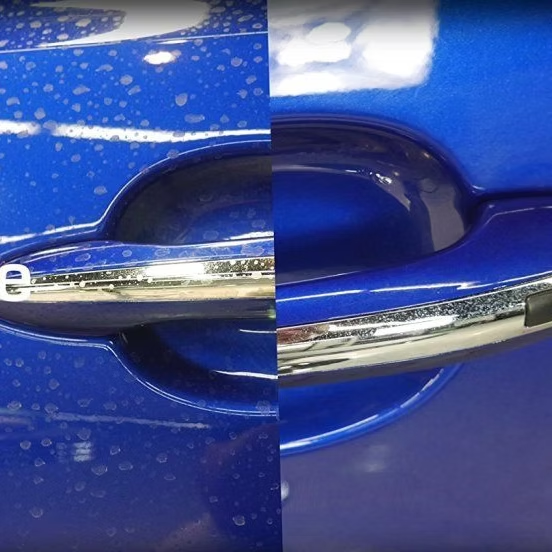
Fresh, light spots sitting on top of the paint or glass. They look like faint white rings or dots and usually come off with a proper wash and a mild mineral-dissolving rinse.
Stage 2: Bonded deposits
Spots that have been heated, rewetted and dried again build up layer on layer and bond to the surface. A wash no longer moves them. They need a dedicated chemical treatment that breaks down the mineral bond.
Stage 3: Etching
Over time, and faster in heat, mineral deposits etch into clear coat or glass. Even after the minerals are gone, you can see the outline of each spot in reflected light, like a tiny crater. At this point the damage is in the surface itself, and the only fix is machine polishing.
| Stage | What it looks like | How it is removed |
|---|---|---|
| 1. Surface deposits | Faint white rings or dots | Careful wash and mild mineral rinse |
| 2. Bonded deposits | Spots that survive a wash | Chemical mineral removal |
| 3. Etching | Spot outlines visible in reflected light | Machine polishing (paint correction) |
| Spots on glass | Hazy, spotted windows | Glass-safe mineral remover, then glass polishing if etched |
| Spots on a coated car | Deposits on top of the coating | Gentle mineral removal; the coating stays intact |
Why scrubbing makes it worse
The instinct is to grab a towel and rub harder. On mineral spots that rarely works and often causes new damage. Mineral deposits are hard, and pressing a towel into them drags those crystals across the surrounding clear coat, adding scratches around the spot without removing it.
Household fixes carry their own risks. Vinegar can soften fresh spots, but it is acidic and can be hard on trim and protective layers if it sits. Kitchen scrubbers, melamine sponges and hand-applied compounds will haze the paint. Ammonia glass cleaners do little against minerals and can damage window tint.
If spots do not come off with a careful wash, stop there and have them assessed before you make the job bigger.
Chemical removal vs polishing
Professional water spot removal starts with the least aggressive step and works up only as far as needed:
- Wash and decontaminate to remove loose dirt and surface film so the real condition is visible.
- Chemical mineral removal with a product made to dissolve calcium and magnesium deposits, applied to a cool panel, worked gently and neutralized. This handles stage 1 and most stage 2 spots without removing any clear coat.
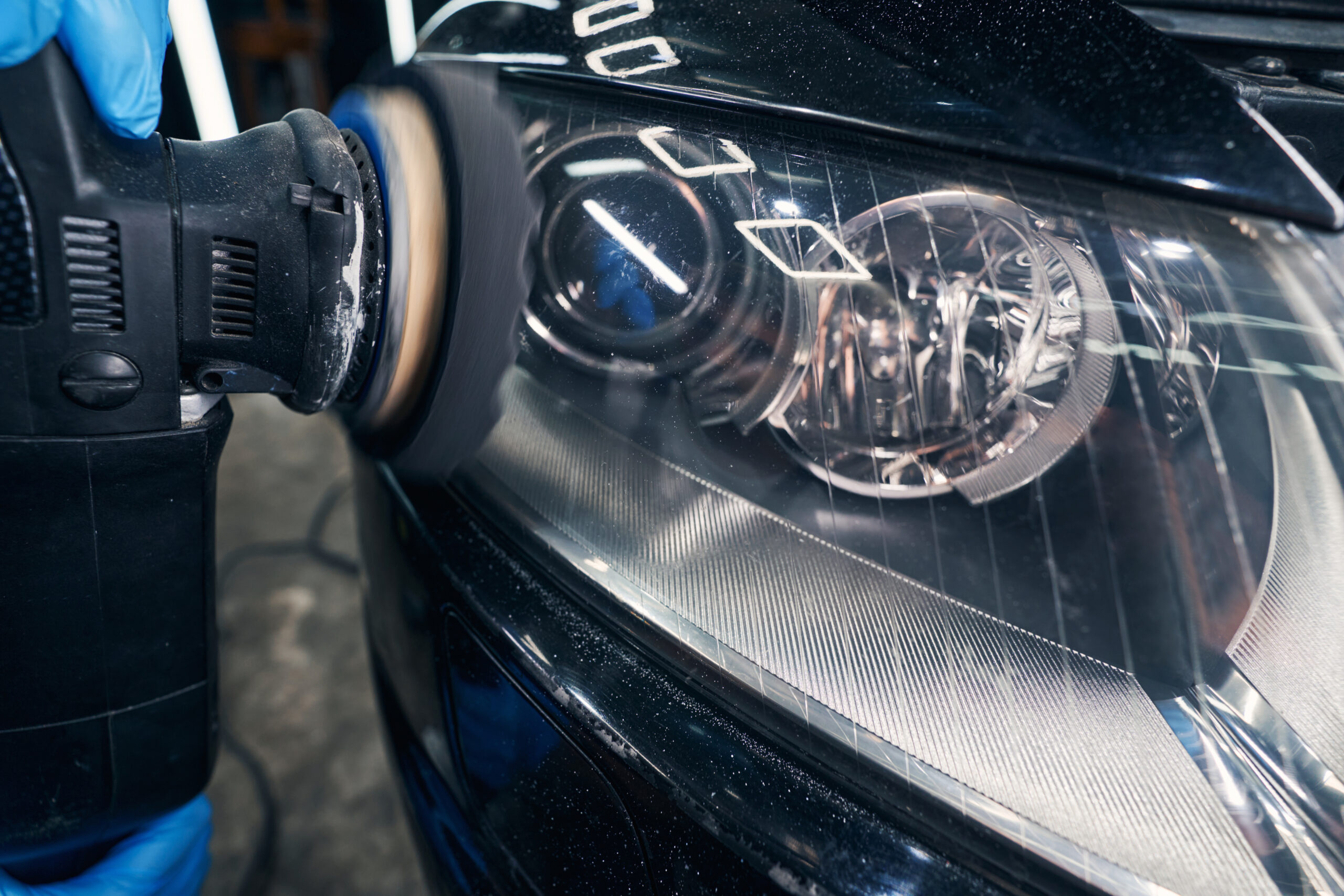
- Machine polishing for stage 3 etching. A 1-step or 2-step paint correction levels the clear coat around each etch until the outline disappears.
- Protection on the finished surface, so the next round of spots lands on a sealer or coating instead of the paint.
Water spot removal is available as an add-on to any detail, and a look at the car beforehand tells you which of these steps it actually needs.
Don't forget the glass
Glass is often worse than paint. Side windows sit right in sprinkler range, and windshields bake in the sun all day. Spotted glass scatters light, which you notice most driving into low sun on 89A.
Glass is harder than clear coat, so it tolerates a stronger mineral remover, and etched glass can be machine polished with glass-specific pads and polish. Very deep etching on a windshield can be beyond what polishing can safely remove. Once the glass is clean, a glass sealant helps water sheet off and makes the next cleaning easier.
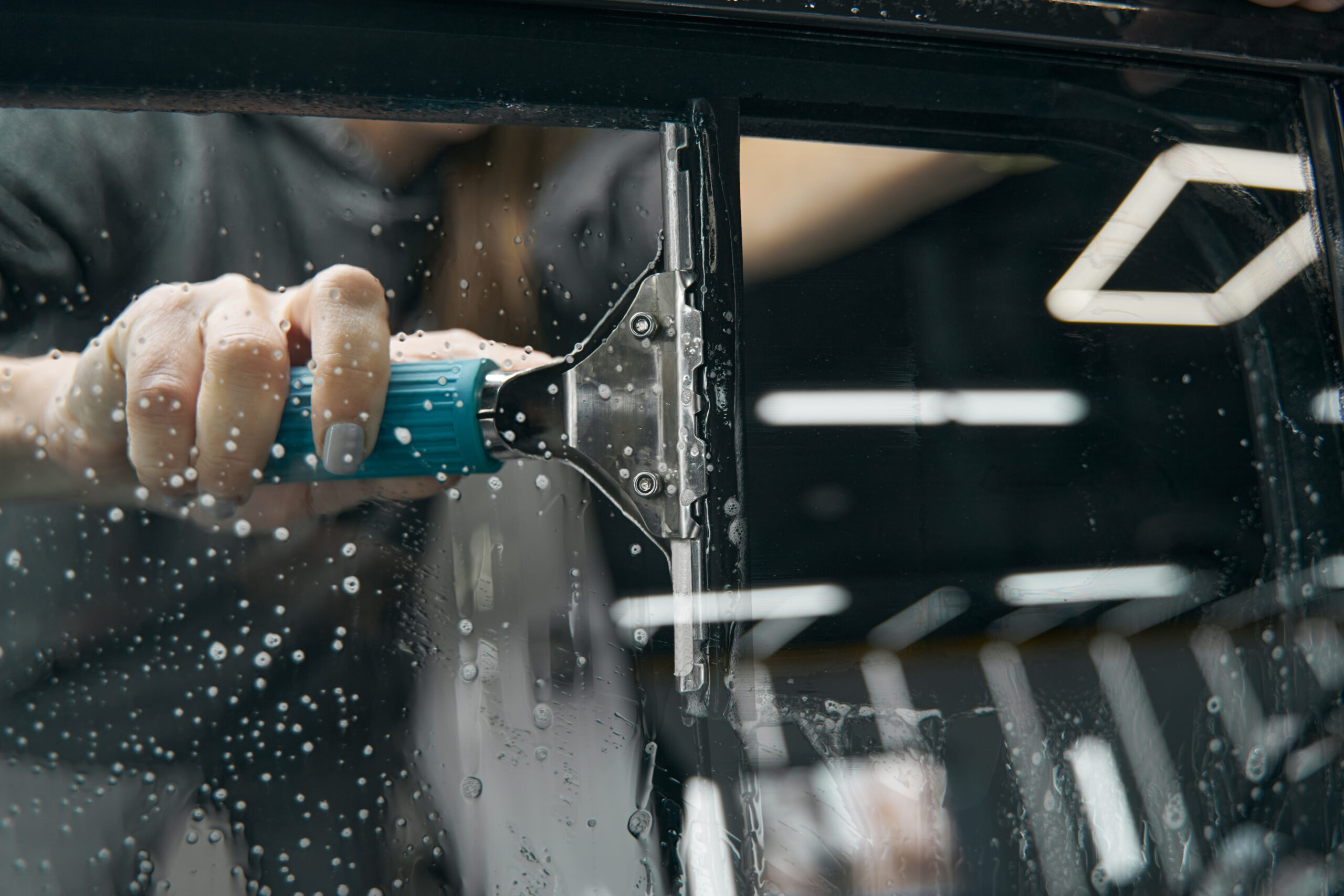
Trim, wheels and other surfaces
Paint and glass get the attention, but minerals land everywhere water does.
- Black plastic trim shows white mineral outlines clearly and is porous, so deposits can sit in the texture. A gentle mineral remover and a soft brush work better than scrubbing, and black trim restoration afterward evens out the finish.
- Chrome and polished metal spot easily and can etch. Use products made for the specific finish rather than an all-purpose cleaner.
- Wheels often combine water spots with baked-on brake dust, so they need iron remover and mineral treatment together.
- Matte paint and wraps cannot be polished, so stopping spots early matters even more on those finishes.
Preventing water spots
- Check your sprinklers. Adjust heads so they do not reach the driveway, or park out of range. Daily sprinkler overspray is one of the most common causes of heavy buildup.
- Dry immediately. Never let a car air-dry after a hose wash. Use a clean drying towel, and forced air for mirrors and trim.
- Wash in shade, in sections. Rinse and dry each section before moving on, especially in summer.
- Protect the surface. A ceramic coating makes water bead and roll off, so fewer drops sit long enough to dry, and the deposits that do form sit on the coating instead of etching paint.
- Deal with spots early. Stage 1 spots come off quickly. Stage 3 etching takes correction.
Why the rinse water matters
Here is the catch with washing a car at most homes in the Verde Valley: the rinse water is the same hard water that causes the spots. A detailer who hooks up to your spigot is rinsing your car with minerals, then racing the sun to dry it.
Our van carries its own deionized water. Deionization removes the dissolved minerals, so the final rinse dries clean even where a drop is missed. Paired with forced-air drying, it keeps the wash itself from creating new spots, and it is one of the main reasons a self-contained rig matters in this area. To have spots assessed, book online or call (928) 451-7211.