What Arizona sun does to paint
Modern automotive paint is a system: primer, a color base coat and a clear coat on top. The clear coat gives the finish its depth and gloss, and it also absorbs most of the ultraviolet exposure. It contains UV inhibitors, but those wear down with time and heat.
Northern Arizona is hard on that layer. Sedona sits about 4,350 feet up and Flagstaff about 7,000, and thinner air at elevation filters less UV. Add long runs of clear sky, high summer surface temperatures and daily heating and cooling, and clear coat ages faster than it would in a cloudier, lower climate.
The damage is gradual. Most owners do not notice it until the roof, hood or trunk lid looks clearly duller than the doors.
The stages of oxidation
Horizontal panels take the most direct sun, so damage almost always shows first on the roof, hood, trunk and the tops of the fenders.
Stage 1: Dulling and loss of gloss
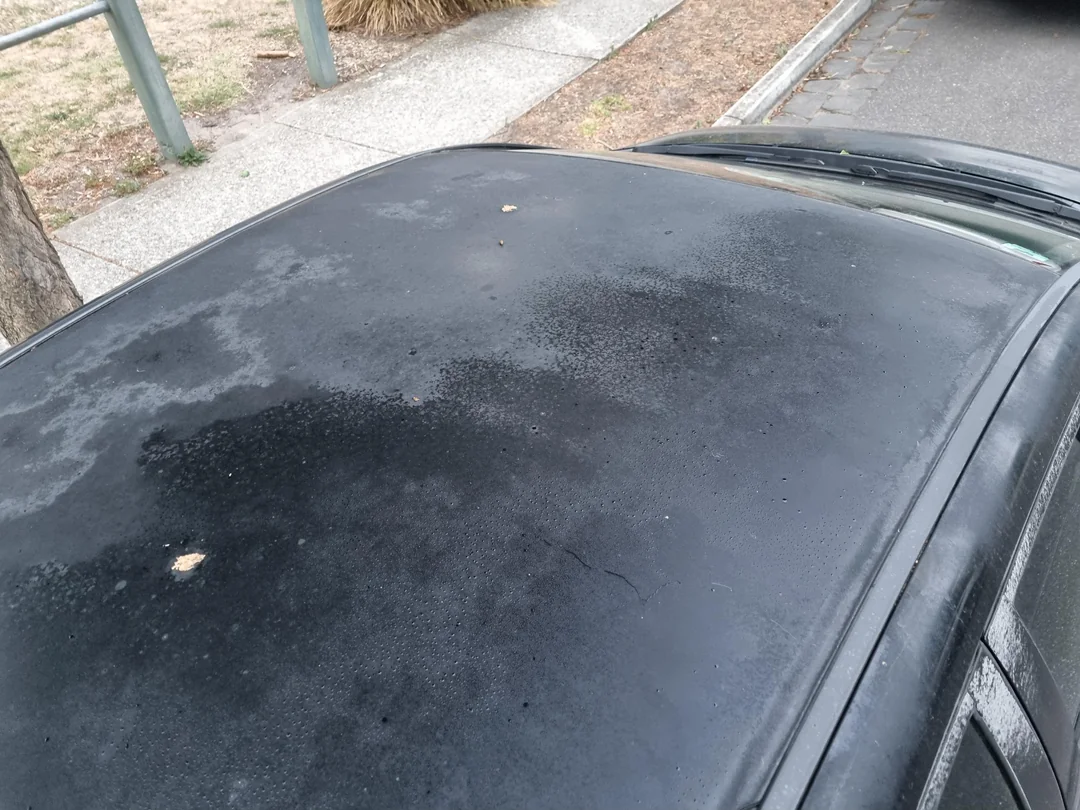
The paint looks intact, but reflections are soft and the color looks slightly faded. The surface may feel dry or rough after a wash. This is oxidation at the very top of the clear coat.
Stage 2: Chalky, faded oxidation
Color looks washed out, and on older single-stage paint a towel may come away tinted with the paint color. Red, black and dark blue show it most. The clear coat is still there, but its surface is heavily degraded.
Stage 3: Clear coat failure
The clear coat starts to cloud, crack, flake or peel, often beginning as a hazy white patch on the roof or hood that spreads outward. Once clear coat is lifting, there is nothing left to polish.
| Condition | What you see | Typical fix |
|---|---|---|
| Stage 1 oxidation | Dull, soft reflections | 1-step paint correction, then protection |
| Stage 2 oxidation | Chalky, faded color | 2-step paint correction, then protection |
| Stage 3 clear coat failure | Peeling, flaking or cloudy patches | Body shop refinish |
| Faded black trim | Gray, dry exterior plastic | Black trim restoration add-on |
| Yellowed headlights | Hazy, yellow lenses | Headlight restoration add-on |
| Faded interior plastics | Chalky dash and door tops | Interior detail, plus shade going forward |
Why some cars and panels fail first
Two cars of the same age can look completely different after a few Arizona summers. A few factors decide which one fades first.
- Color. Dark colors absorb more heat, and reds are known for fading. White and silver hide early oxidation well, so the damage often goes unnoticed until it is advanced.
- Panel angle. Roofs, hoods and trunk lids face the sky all day. Doors and bumpers see far less direct sun.
- Parking habits. A car parked nose-in at the same spot every afternoon takes the same sun on the same panels, day after day.
- Paint history. Older single-stage paint has no separate clear coat to protect the color. A previous repaint with a thin clear coat can fail years ahead of the factory finish around it.
- Maintenance. Bare, unprotected paint and grime left baking in the sun both speed things up.
If one panel looks worse than the rest, that is usually where to start the inspection.
What paint correction can fix
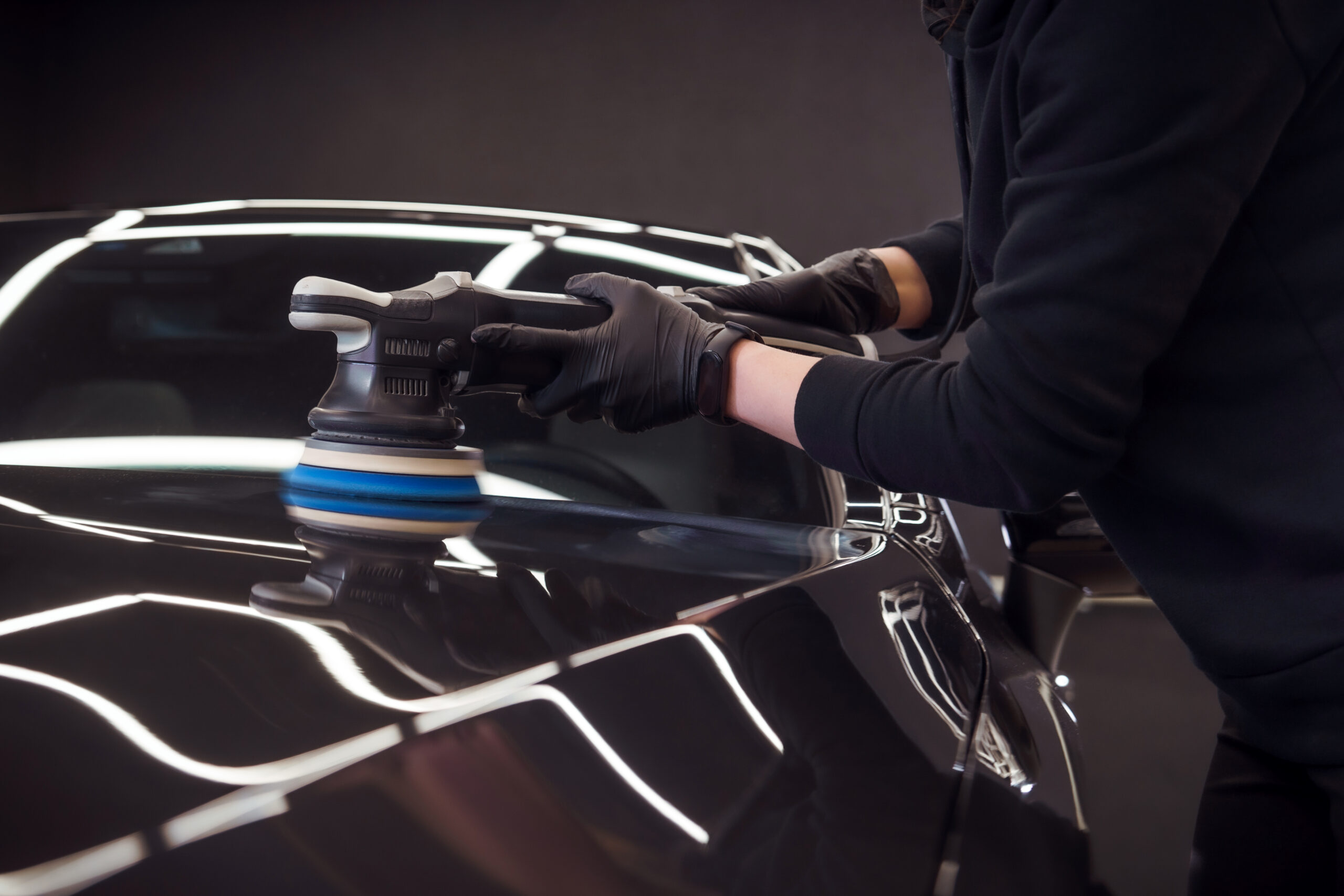
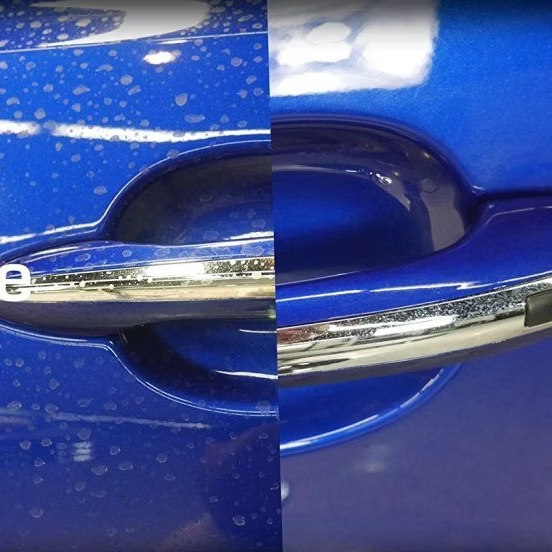
Stage 1 and most stage 2 oxidation can usually be corrected. Machine polishing removes a very thin layer of degraded clear coat and exposes healthy material underneath, which brings back gloss and color depth.
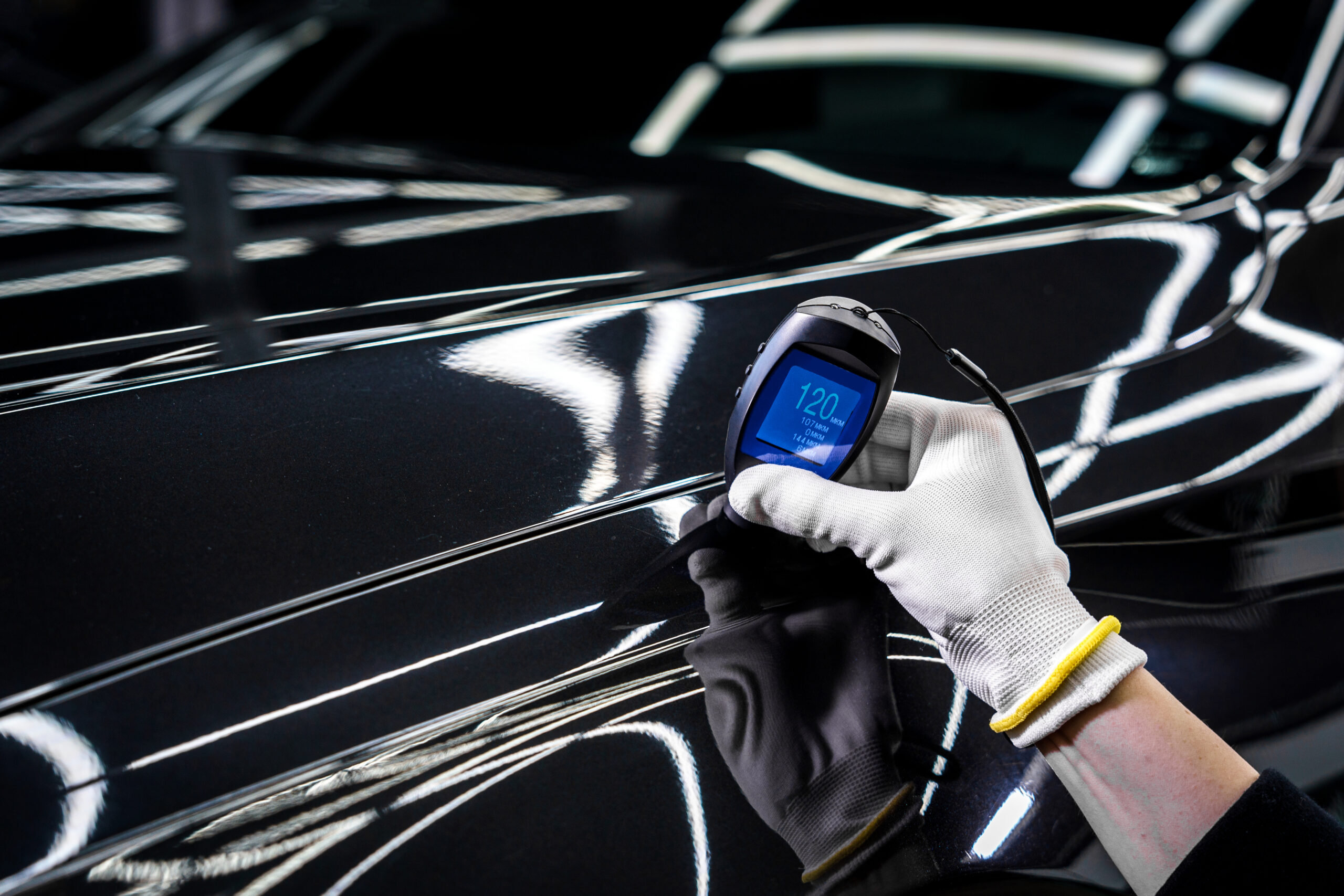
A 1-step correction suits light dullness. Heavier fading generally calls for a 2-step paint correction: a cutting stage to remove the oxidized layer, then a refining stage to restore clarity. A paint depth reading helps confirm there is enough clear coat to work with, and a test section on the worst panel shows what result is realistic before the whole car is done.
Correction is only half the fix. Freshly polished paint has no protection, and in this climate it starts oxidizing again. Follow it with a ceramic sealer or a full ceramic coating.
When it needs a body shop instead
Polishing cannot rebuild clear coat. If you see any of the following, the panel needs to be refinished by a body shop:
- Clear coat that is peeling, flaking or lifting at the edges
- White, cloudy patches that do not change after a test polish
- Cracking or crazing in the finish
- Primer or bare base coat showing through
- Scratches that catch a fingernail and show a different color underneath
An honest detailer will tell you when a panel is past correction rather than polish it and hope. Often only the roof or hood has failed, and the rest of the car can be corrected and protected after the repaint so it matches.
Interior UV damage
The sun does not stop at the glass. Dashboards, door tops and rear decks take direct exposure through the windshield and back glass, and the heat inside a closed car in summer speeds things up.
- Dashboards fade, turn chalky and can crack.
- Leather dries out, loses its finish and develops creases that become cracks.
- Plastic and vinyl trim turns gray and brittle.
- Exterior black trim fades to a dull gray.
- Headlights yellow and haze as their factory coating breaks down.
Cleaning and conditioning slow this down. An interior detail removes the grime and dust that sit on surfaces and hold heat against them, and add-ons such as black trim restoration and headlight restoration bring the faded exterior pieces back.
Preventing sun damage
- Use shade. Park in a garage, carport or shade when you can, and use a windshield sunshade to protect the dash.
- Keep paint protected. A sealer is better than bare paint, and a ceramic coating holds up for years and carries a five-year warranty.
- Wash regularly. Dust, bird droppings and pine sap bake onto paint in the sun and speed up damage.
- Avoid midday work. Do not wash or polish in direct sun; hot panels dry products and water too fast.
- Check the top surfaces. Look at the roof and hood every few months. Catching stage 1 early keeps the fix to a light polish.
Not sure which stage your paint is in? Contact us or call (928) 451-7211 with a photo of the worst panel, and we will tell you whether it is a correction job or a body shop job.